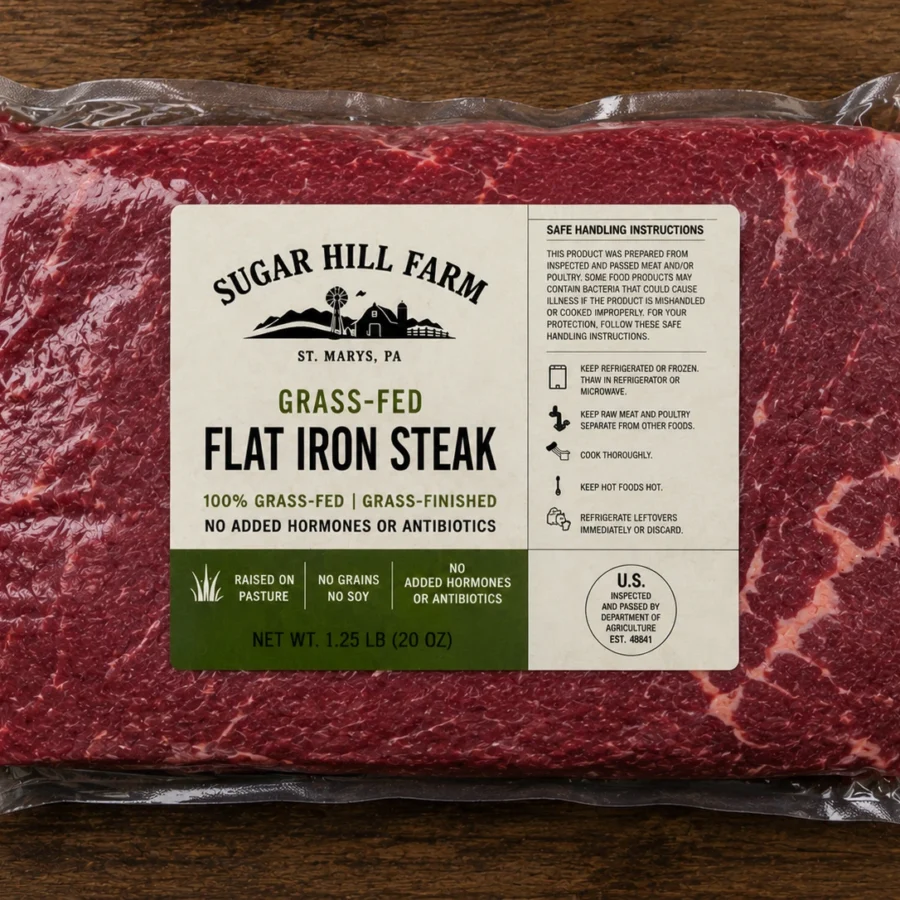
Steak
Grass-Fed Flat Iron Steak
$15.00 / lb
One of the most tender cuts on the animal outside the tenderloin, with more marbling and flavor than most people expect.
In stock — ready to ship
Flash-frozen and shipped in insulated packaging.
Free shipping on orders over $76.
Per 4oz cooked serving (typical values for grass-fed flat iron steak): approx. 190 calories · 24g protein · 9g fat
Ships frozen via FedEx 2-Day or UPS Priority. Orders placed before 12pm EST ship same day (Mon–Thu). Pennsylvania deliveries typically arrive within 1–2 business days.
Free shipping on orders over $76. Flat-rate $15 shipping on all other orders.
Keep frozen until ready to use. Store at 0°F or below for up to 12 months. Thaw in the refrigerator 24–48 hours before cooking. Do not refreeze after thawing.
About This Product
Grass-Fed Flat Iron Steak
Flat iron steak comes from the top blade, a muscle in the shoulder that sits close to the chuck. For most of butchery history, this muscle got ground up or turned into stew meat, because it has a tough band of connective tissue running straight through the center. It wasn't until meat scientists at the University of Nebraska and University of Florida ran muscle profiling research in the early 2000s that someone figured out how to separate that connective tissue out and turn the rest of the muscle into a standalone steak.
Why Flat Iron Steak Cut Almost Didn't Exist
That research is the actual reason flat iron shows up on menus and in butcher cases today. Once that center seam of connective tissue is removed, what's left is a surprisingly tender piece of meat, second only to the tenderloin in tenderness according to that same research, despite coming from a working part of the shoulder. It's a rare case of a genuinely new retail cut coming out of food science rather than tradition, and it's part of why flat iron didn't become common in butcher shops until the last couple decades.Grass-Fed Flat Iron Steak Flavor and Texture
Because it comes from the shoulder, a muscle that does real work, flat iron carries noticeably more marbling and beefier flavor than a lean cut like filet mignon. That marbling matters even more on a grass-fed animal, since grass-fed beef generally runs leaner overall. A well-marbled cut like flat iron holds onto more of what fat there is, which helps it stay juicy through the cook. The texture is firm but tender, closer to a strip steak than a filet, with enough chew to feel substantial without crossing into tough. It takes a marinade well if you want to add flavor, but it also holds up fine cooked simply with just salt and pepper.How to Cook a Grass-Fed Flat Iron
This cut does best with high, direct heat and a short cook time. Grill it or sear it in a hot cast iron pan, about 4 to 5 minutes per side for a steak around an inch thick, aiming for medium-rare to medium. Because grass-fed beef has less fat to protect it from drying out, don't walk away from the pan, this isn't a cut that forgives an extra few minutes. Let it rest for 5 minutes before slicing. Flat iron has a visible grain running through it, so slicing against that grain matters more here than on some other steaks, it's the difference between a tender bite and a chewier one.Marinating Tips
Flat iron takes well to a marinade if you want to add another layer of flavor, though it doesn't strictly need one the way a leaner cut might. A simple combination of olive oil, garlic, soy sauce, and a splash of acid like lime or vinegar works well, 30 minutes to a few hours is enough, since this isn't a tough cut that needs hours to break down.Where It Fits on the Table
Flat iron works well anywhere you'd use a strip steak or sirloin, sliced over a salad, on its own with a simple side, or cut into strips for fajitas or a stir fry. It's a good middle-ground cut if you want more flavor than filet mignon offers but don't need the size or price point of a ribeye.Storage and Thawing
Flat iron ships flash-frozen and vacuum sealed, same as every cut we sell. Thaw it in the refrigerator over about 24 hours, or use the cold water method, submerged and sealed, changing the water every 30 minutes, for a faster thaw in roughly an hour. Raised the same way as the rest of our herd, 100% grass-fed and grass-finished on our own pasture in St. Marys, Pennsylvania, no grain, no shortcuts.Farm Practices
| Feed | 100% Grass — No Grain Ever |
|---|---|
| Raised | Open Pasture, St. Marys PA |
| Hormones | None |
| Antibiotics | None |
| Processing | USDA Inspected |
| Packaging | Vacuum-sealed, flash-frozen |
Cut Category
Steak
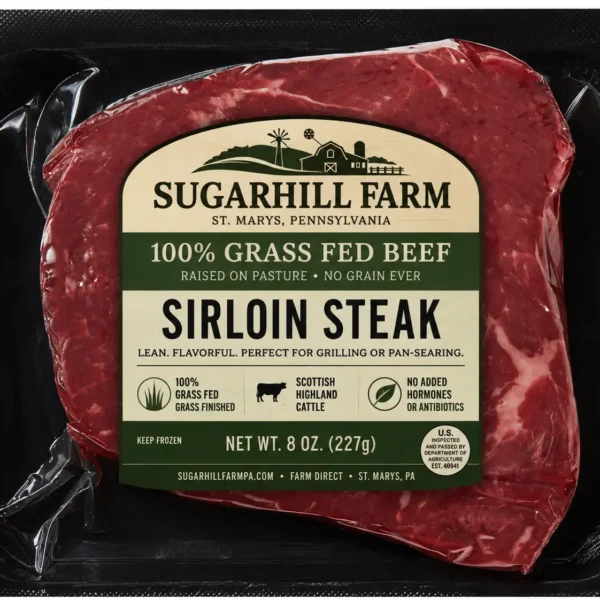
Reviews
There are no reviews yet.