Yes, grass-fed beef typically costs 20% to 40% more per pound than conventional grain-fed beef. The price difference comes down to slower growth rates and more land needed per animal. Buying in bulk, like a beef box, significantly lowers the per-pound cost. Grass-fed beef often produces less shrinkage when cooked, which changes the real cost per serving. Buying direct from a farm usually costs less than the same quality at a specialty grocery store.
If you’ve shopped for beef lately, you’ve probably noticed grass-fed beef costs more than the regular beef sitting right next to it. That price gap is real, and it’s worth understanding exactly where it comes from. Is grass-fed beef more expensive than regular beef? Yes, but the reasons behind that price matter more than the number itself.
I’m Tray, and between running Sugar Hill Farm and managing a household budget with Carly and four kids, I think about beef pricing from both sides of the counter. Let’s break down what actually drives the cost.
Why Grass-Fed Beef Costs More
Grass-fed cattle grow slower than grain-fed cattle, often taking several months longer to reach market weight. That extra time on pasture means more feed, more land, and more overall care per animal. All of that adds up before the beef ever reaches a package.
Grain-fed operations can raise cattle faster and at higher density, which lowers the cost per animal significantly. Grass-fed farms, especially smaller ones like ours, simply can’t match that scale. The price difference reflects a genuinely different farming model, not just marketing.
Typical Price Difference Per Pound
On average, grass-fed beef runs about 20% to 40% higher per pound than conventional grain-fed beef. Ground beef often shows the smallest gap, while specialty cuts like ribeye can show a wider difference. The exact gap depends heavily on where you’re buying and how the animal was raised.
Grocery store grass-fed beef tends to sit at the higher end of that range, since it carries retail markup on top of production costs. Buying direct from a farm typically narrows that gap since it cuts out the middleman entirely.
Why Direct-to-Farm Pricing Helps
When you buy directly from a farm, you skip the distributor and retail markup that grocery stores add on top of the base cost. That’s a meaningful savings, even though shipping adds its own cost into the equation. For many families, direct-to-farm pricing ends up competitive with specialty grocery store prices.
We’ve had customers tell us they were shocked our beef cost less than the “premium” grass-fed beef at their local grocery chain. That’s simply the math of cutting out extra steps between the farm and the freezer. It’s one of the main reasons we built our shipping model in the first place.
How Buying in Bulk Changes the Math
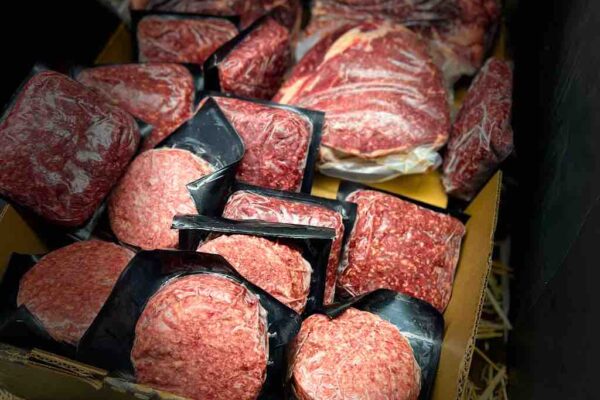
Buying a single cut at a time is always the most expensive way to shop for beef, grass-fed or not. A beef box spreads processing costs across a larger order, which lowers the average price per pound significantly. This is true across almost every meat category, not just beef.
Carly and I noticed this firsthand in our own kitchen years before we ever started the farm’s shipping side. Buying a quarter or half of an animal at once dropped our per-pound cost noticeably compared to buying cuts individually. That same math applies to any beef box ordered today.
Cooking Shrinkage: The Hidden Cost Factor
Grain-fed beef often shrinks more during cooking due to higher water content from rapid growth and grain finishing. Grass-fed beef tends to hold its size better, which affects the real cost per serving, not just per pound. A pound of grass-fed beef can end up feeding you more than a pound of grain-fed beef once cooked.
This detail rarely gets factored into price comparisons, but it matters over time. If a cut shrinks 25% less during cooking, the effective price gap between grass-fed and grain-fed beef shrinks along with it. It’s a small detail that changes the math more than people expect.
Is the Extra Cost Worth It?
That answer depends on your priorities in the kitchen and at the table. If flavor, nutrition, and knowing exactly how your food was raised matter to you, the price difference reflects real value. If cost is your only factor, conventional beef will almost always be cheaper on paper.
For our own family, the choice was never really about price alone. It came down to wanting to know exactly what our kids were eating, since we were raising the cattle ourselves. That’s a value most price comparisons can’t fully capture.
FAQ
Why is grass-fed beef more expensive than regular beef?
Grass-fed cattle grow slower and require more land and time per animal, which raises production costs compared to grain-fed operations.
How much more does grass-fed beef typically cost?
Grass-fed beef usually costs 20% to 40% more per pound than conventional grain-fed beef, depending on the cut and where it’s purchased.
Is buying grass-fed beef direct from a farm cheaper than a grocery store?
Often, yes. Direct-to-farm pricing skips distributor and retail markup, which can make it competitive with or cheaper than specialty grocery store prices.
Does buying a beef box save money compared to buying cuts individually?
Yes. Bulk orders like a beef box spread processing costs across more pounds, lowering the average price per pound significantly.
Does grass-fed beef shrink less when cooked?
Generally, yes. Grass-fed beef tends to hold its size better during cooking, which can offset some of the higher upfront price per pound.
You can see our current pricing across every cut on our main shop page.