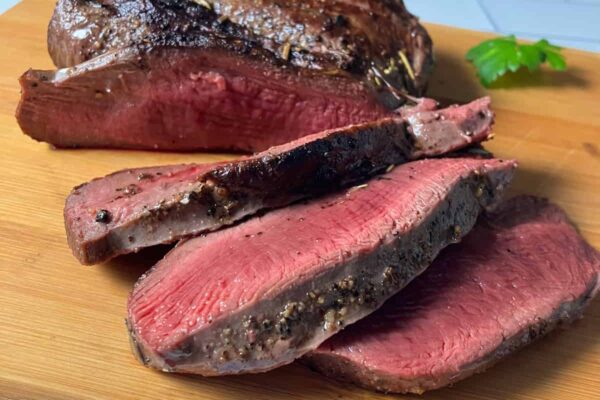
How to cook a T-bone steak comes down to one detail most people miss: it’s really two different steaks joined at a bone, and each side cooks a little differently. I’m Tray, and between the farm and feeding four kids, T-bone night is one of the few dinners that gets a unanimous yes at our table.
Get the technique right and a T-bone delivers the best of both worlds in one plate. Get it wrong, usually by treating it like a single uniform cut, and one side ends up overcooked while the other is still catching up.
What Makes a T-Bone Steak Different
A T-bone comes from the short loin, cut so that it includes a piece of the strip loin on one side of the T-shaped bone and a piece of the tenderloin on the other. That’s what gives you two distinct textures and flavors in a single steak.
The strip side is firmer, more marbled, and carries a bolder beef flavor. The tenderloin side is smaller, leaner, and much more delicate, prized for its buttery texture more than its flavor intensity.
Because the tenderloin section is thinner and cooks faster than the strip section, a T-bone needs slightly more attention than a single, uniform steak like a ribeye or sirloin.
Bringing Your Steak to the Right Starting Temperature
Pull your T-bone out of the refrigerator about 30-45 minutes before cooking. A steak that starts closer to room temperature cooks more evenly, since you’re not fighting a cold center while the outside sears.
Pat it dry with a paper towel before seasoning. Excess moisture on the surface gets in the way of a good sear, so a dry surface matters more than people expect.
Season generously with salt and pepper, and don’t be shy about it. A thick cut like a T-bone can handle more seasoning than a thin steak, since a good amount of it is going to sit on the surface rather than penetrate all the way through.
The Reverse Sear Method
For a T-bone this thick, reverse searing gives you the most control over both sides of the bone. Start by cooking the steak low and slow in a 275°F oven until it reaches about 10-15 degrees below your target temperature.
Once it’s close, move it to a screaming hot cast iron pan or grill for a fast sear, about 60-90 seconds per side. This step builds the crust without pushing the interior past where you want it.
The advantage of reverse searing a T-bone specifically is control. You get the entire steak to an even internal temperature during the slow phase, then the quick sear browns the outside without overcooking the thinner tenderloin section.
The Hot Grill Method
If you’d rather grill straight through, set up two heat zones, one hot and direct, one cooler and indirect. Sear the steak hard over direct heat for 2-3 minutes per side, then move it to indirect heat to finish cooking through.
Position the steak so the thicker strip side faces the hotter part of the grill and the tenderloin side sits slightly toward the cooler zone. This small adjustment helps even out how each side finishes, since the tenderloin doesn’t need as much heat exposure as the strip.
Internal Temperature Guide
Use a meat thermometer inserted into the thickest part of the strip side, away from the bone, for the most accurate reading. Pull the steak a few degrees before your target, since it continues cooking during the rest.
| Doneness | Pull Temperature | Final Temperature |
|---|---|---|
| Rare | 115°F | 125°F |
| Medium-Rare | 125°F | 135°F |
| Medium | 135°F | 145°F |
| Medium-Well | 145°F | 155°F |
Medium-rare is the sweet spot for most T-bone steaks, since it keeps the tenderloin side tender while still letting the strip side develop full flavor.
Resting Before You Cut
Let a T-bone rest for at least 8-10 minutes before cutting into it. This is a thick, dense cut, and skipping the rest sends far more juice onto the cutting board than a thinner steak would lose.
Tent it loosely with foil while it rests to hold in warmth without trapping steam, which can soften the crust you just built.
Slicing Around the Bone
Once rested, cut along both sides of the bone to separate the strip and tenderloin sections. This makes both pieces easier to slice cleanly and easier to serve if you’re splitting the steak between two people.
Slice each section against the grain. The strip and tenderloin run in slightly different directions, so take a second to look at each piece before cutting rather than slicing straight through both at the same angle.
Common Mistakes to Avoid
Cooking a T-bone like a single uniform steak is the most common mistake. Treat it as two cuts sharing a bone, and adjust your heat and positioning accordingly, especially if you’re grilling.
Skipping the thermometer is another common issue. A T-bone is thick and expensive enough that guessing on doneness carries more risk than it does with a thinner, cheaper cut.
The third mistake is cutting in too soon. A steak this size needs the full rest period, and rushing it undoes a lot of the work that went into cooking it properly.
Storing T-Bone Steak
T-bone steak freezes well for up to a year when vacuum-sealed, the same as every cut that ships from our farm. Thaw it in the refrigerator over 24 hours rather than on the counter, especially given its thickness.
If you’re planning a T-bone dinner, pull it from the freezer the night before so it has plenty of time to thaw fully before you bring it to room temperature the next day.
Choosing the Right Thickness
T-bone steaks typically run 1 to 1.5 inches thick, and thickness matters more here than with most cuts. A thinner T-bone cooks fast enough that the gap between the strip and tenderloin sections barely matters, while a thicker cut makes the reverse sear method worth the extra step.
If you’re new to cooking T-bone steak, starting with a 1-inch cut is more forgiving while you get a feel for timing. Once you’re comfortable managing the two sections, a thicker steak gives you more room to nail a deep sear without overshooting your target temperature.
Pairing and Serving Ideas
A T-bone is substantial enough to be the centerpiece of the meal on its own, so simple sides tend to work best. Roasted potatoes, a green vegetable, and a good compound butter melted over the top rounds out the plate without competing for attention.
If you’re building a full order around steak night, our Grass-Fed T-Bone Steak is one of our most reordered cuts. For a comparison of other classic steakhouse cuts, Filet Mignon vs Ribeye breaks down the tenderloin side of the T-bone equation in more depth, and What Is Flat Iron Steak? covers another tender, well-marbled option if you’re comparing cuts before you order.
Frequently Asked Questions
What’s the difference between a T-bone and a porterhouse?
Both come from the same general area and include strip and tenderloin sections, but a porterhouse includes a larger portion of tenderloin. A T-bone’s tenderloin section is smaller by definition.
What temperature should I cook a T-bone steak to?
Medium-rare, pulled around 125°F and resting up to about 135°F, is the most popular choice since it keeps the tenderloin tender without undercooking the strip side.
Should I grill or pan-sear a T-bone steak?
Both work well. A hot grill with two heat zones gives good control, while a reverse sear in the oven followed by a hot pan sear gives the most even results for a steak this thick.
Why does my T-bone cook unevenly?
The strip and tenderloin sections are different sizes and thicknesses, so they naturally cook at different rates. Positioning the thicker strip side toward more direct heat helps even things out.
How long should a T-bone steak rest before cutting?
At least 8-10 minutes. It’s a thick, dense cut, and cutting too early lets far more juice escape than it would with a thinner steak.
A T-bone steak rewards a little extra attention with two great cuts of steak in a single sitting, strip on one side, tenderloin on the other, both worth cooking right. Shop our grass-fed steaks and put this method to the test on your next steak night.