If you have spent any time looking into premium beef, chances are you have come across Wagyu. Maybe you saw it at a steakhouse. Maybe you noticed the price tag online and nearly dropped your phone. Or maybe you are already buying grass fed beef and started wondering how Wagyu fits into the picture.
One question I hear more often these days is:
“Is Wagyu beef grass fed?”
The short answer is simple:
Some Wagyu beef is grass fed, but most traditional Wagyu beef is not 100% grass fed from start to finish.
That surprises people.
A lot of folks assume Wagyu automatically means grass fed because Wagyu carries a premium reputation. But cattle genetics and feeding programs are two completely different things.
To understand why, it helps to understand what Wagyu actually is and how cattle are commonly raised.
Wagyu Is A Breed. Grass Fed Is A Feeding Method.
This is the part that clears up most of the confusion.
Wagyu is not a feeding program.
Wagyu is a breed of cattle originally developed in Japan and known around the world for exceptional marbling and rich flavor.
Grass fed, on the other hand, describes how cattle are raised and what they eat.
Think about it like this.
A truck and gasoline are not the same thing.
One describes what it is.
The other describes how it runs.
Beef works similarly.
You can have:
- Wagyu that is grain finished
- Wagyu that is grass fed
- Conventional cattle that are grass fed
- Conventional cattle that are grain finished
The breed and the feeding system work together, but they are not interchangeable.
That distinction matters when you are trying to understand labels.
You Might Like: Why Grass Fed Beef
Most Wagyu Starts On Grass
Here is something many people do not realize.
A large percentage of cattle production begins on pasture.
Even cattle that eventually become grain finished often spend part of their lives grazing and eating forage.
Wagyu cattle are no different.
Many Wagyu cattle begin life eating grass and forage while developing their frame and growing naturally.
The difference comes later.
To create the heavy marbling Wagyu is famous for, many premium Wagyu programs transition cattle onto specialized grain-based feeding programs.
Those feeding periods can last many months.
That additional nutrition helps build the intense intramuscular fat that gives Wagyu its signature appearance and buttery eating experience.
I remember talking with somebody who thought Wagyu cattle spent their entire lives eating some kind of secret luxury cattle feed.
Truth is, raising cattle usually comes down to good genetics, proper management, quality nutrition, and patience.
There is no magic.
Just different farming approaches depending on the end goal.
Why Most Wagyu Is Grain Finished
The biggest reason comes down to marbling.
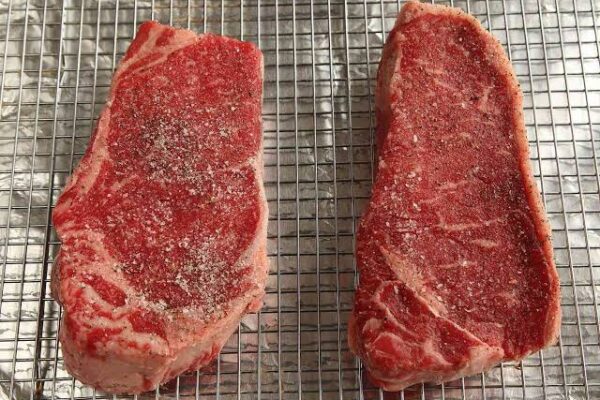
If you have ever seen premium Wagyu steak, you know exactly what I mean.
Those white lines of fat spread throughout the meat are what make Wagyu famous.
That marbling creates:
- Rich texture
- Tenderness
- Buttery mouthfeel
- Distinctive flavor
Specialized feeding programs help encourage that marbling development.
Traditional Japanese Wagyu programs often include extended grain-finishing periods.
Many American Wagyu and Australian Wagyu programs follow similar approaches.
The goal is simple.
Build exceptional marbling.
That does not automatically make grain-finished beef better.
It simply creates a different product.
Can Wagyu Beef Be 100% Grass Fed?
Yes.
Grass fed Wagyu absolutely exists.
Some specialty farms raise Wagyu cattle entirely on pasture and forage from start to finish.
That means no grain-finishing period.
No transition into concentrated feed programs.
Just grass, forage, hay, and pasture-based nutrition throughout the animal’s life.
Grass fed Wagyu often develops differently than grain-finished Wagyu.
You may notice:
- Less extreme marbling
- Slightly leaner meat
- Richer beef flavor
- Firmer texture
- More pasture influence in taste
One thing people sometimes misunderstand is assuming grass fed Wagyu should look identical to heavily grain-farbled premium Wagyu.
It usually does not.
Different feeding systems create different outcomes.
That is true across beef production in general.
Grass Fed Wagyu vs Grain Finished Wagyu
People naturally want to know:
Which one is better?
Truthfully, it depends on what matters most to you.
Here is a practical breakdown.
| Grass Fed Wagyu | Grain Finished Wagyu |
|---|---|
| Forage-based diet | Grain introduced later |
| Leaner profile | Higher marbling |
| Stronger beef flavor | Richer buttery flavor |
| Often firmer texture | Extremely tender texture |
| More pasture influence | More fat development |
Some people love heavy marbling.
Others prefer beef with a stronger beef-forward flavor.
Neither choice is automatically right or wrong.
It comes down to preference.
Does Grass Fed Wagyu Taste Different?
Yes.
And people notice.
Traditional grain-finished Wagyu is famous for richness.
Some steaks are so heavily marbled that a small portion goes a long way.
Grass fed Wagyu often brings more balance.
You may notice:
- More pronounced beef flavor
- Slightly less richness
- More pasture influence
- Different texture profile
Years ago, somebody picking up beef asked me if premium beef automatically means “better.”
My answer then is the same answer now.
Better depends on what you enjoy eating.
Some folks want maximum marbling.
Some want pasture-raised cattle and grass based feeding programs.
Taste is personal.
Is Grass Fed Wagyu Healthier?
People searching this usually mean:
“Is grass fed Wagyu healthier than grain-finished Wagyu?”
Grass fed beef generally contains:
- Higher omega-3 fatty acids
- Higher CLA levels
- Leaner fat composition
Wagyu also naturally develops fat differently than many conventional cattle breeds.
But nutrition is rarely as simple as labeling one product healthy and another unhealthy.
The bigger picture matters.
Overall eating habits matter.
Portion sizes matter.
Food quality matters.
Grass fed Wagyu and grain-finished Wagyu simply offer different nutritional profiles.
How To Know If Wagyu Is Actually Grass Fed
If buying Wagyu, do not assume.
Ask questions.
Look for:
- 100% grass fed labeling
- Grass finished terminology
- Feeding program information
- Farm transparency
- Pasture raising practices
One thing I always tell people is simple.
Good producers usually do not hide how cattle are raised.
People deserve to know where their food comes from.
That transparency matters.
Final Thoughts
So, is Wagyu beef grass fed?
Sometimes.
But not always.
Wagyu refers to cattle genetics.
Grass fed refers to how cattle are raised and what they eat.
Many Wagyu cattle begin life grazing pasture.
But most traditional premium Wagyu eventually enters grain-finishing programs designed to develop the marbling that made Wagyu famous.
Grass fed Wagyu absolutely exists.
It simply produces a different result.
At the end of the day, understanding beef labels comes down to asking better questions and learning how cattle are actually raised.
Because the more you understand your food, the easier it becomes to buy with confidence.